01 Nov Can You Print on Watercolor Paper? Yes – Here’s How to Do It Without Smudges
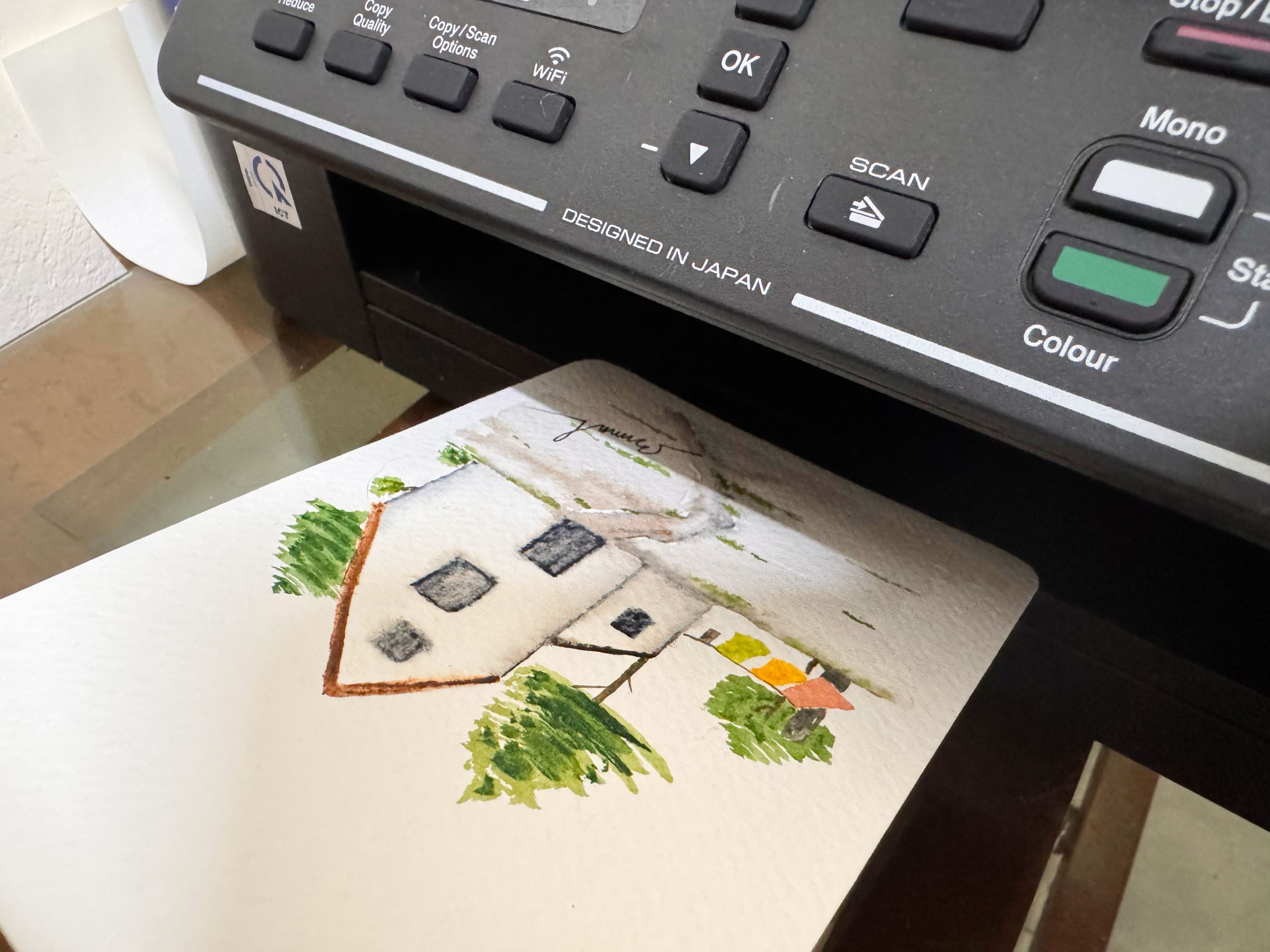
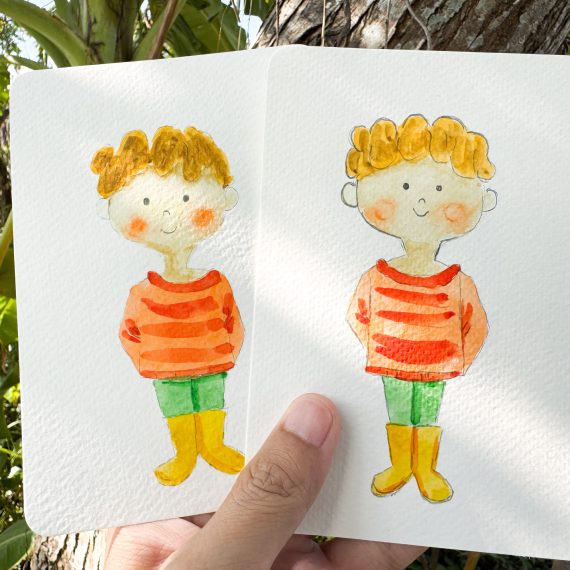
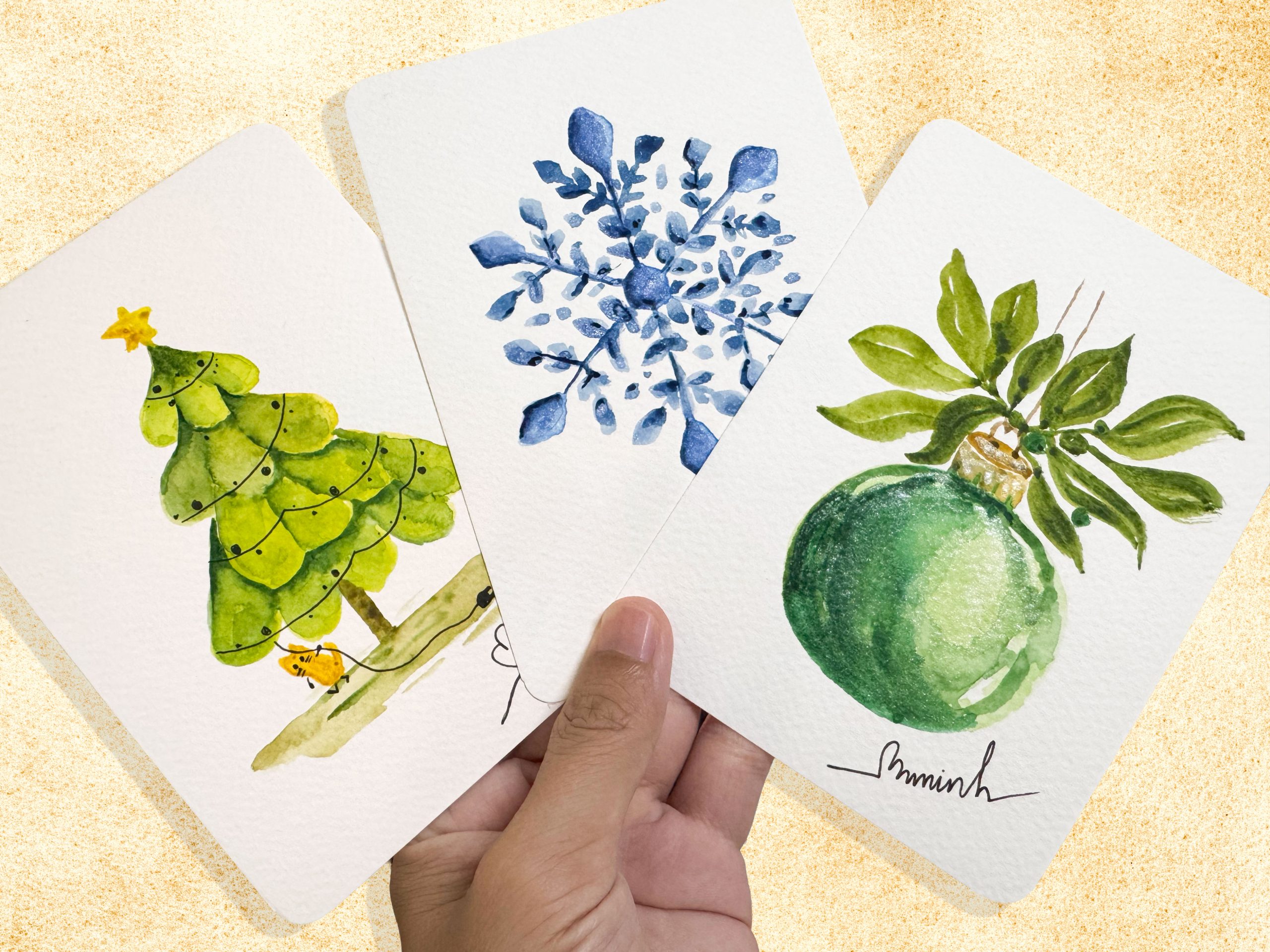
You just downloaded a free sketch, and you’re wondering: why not print it straight onto watercolor paper? So, can you print on watercolor paper? Yes – I do it all the time, and I’ve even printed postcards to give to friends. But not every printer can handle it. In this post, I’ll show you how to check your printer in two minutes, how to print without jams or smudges, and what to do if your printer says no.
For: Beginners · 4-min read
This post contains affiliate links. As an Amazon Associate I earn from qualifying purchases.
Quick Answer
Yes, you can print on watercolor paper if your printer accepts thick paper (around 300gsm / 140 lb) and its ink doesn’t dissolve in water. Use an inkjet printer with a manual feed slot, load one sheet at a time, print light gray lines with black ink, and let them dry completely before painting. If the paper jams or the lines smear in a test, print on regular paper and trace it instead.
Why Printing on Watercolor Paper Often Goes Wrong
Watercolor paper wasn’t made to run through a printer. There are three main reasons:
1. The paper is too thick. Most home printers are designed for thin office paper, while the most popular watercolor paper is 300gsm. Thick paper has to bend its way through the main tray, so it jams easily or the printer claims it’s out of paper.
2. The ink dissolves in water. Many inkjet printers use dye ink (ink that dissolves in water) for color. When a wet brush touches it, the line blurs and bleeds into your paint. Pigment ink (tiny color particles that sit on top of the paper and don’t dissolve) holds up much better.
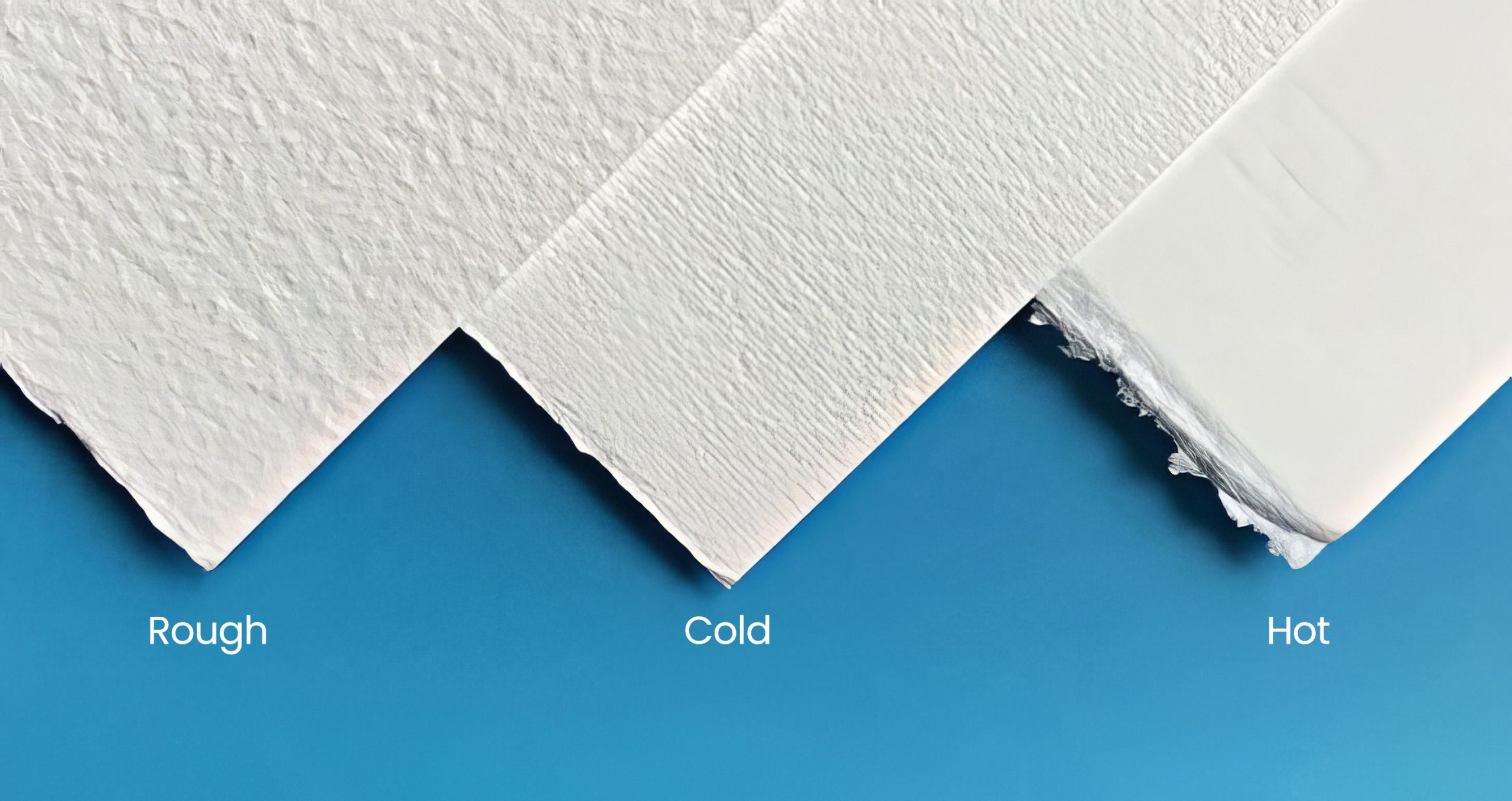
3. The surface is textured. Cold press paper has a bumpy texture, so printed lines can break up in the little dips – usually not a big deal for a simple sketch.
What about laser printers? The heat and powdered toner of a laser printer don’t get along with thick, textured paper – it can jam and may even damage the printer. I don’t recommend it unless your manual clearly says it handles heavy cardstock.
How to Print a Sketch on Watercolor Paper Without Jams or Smudges (5 Steps)
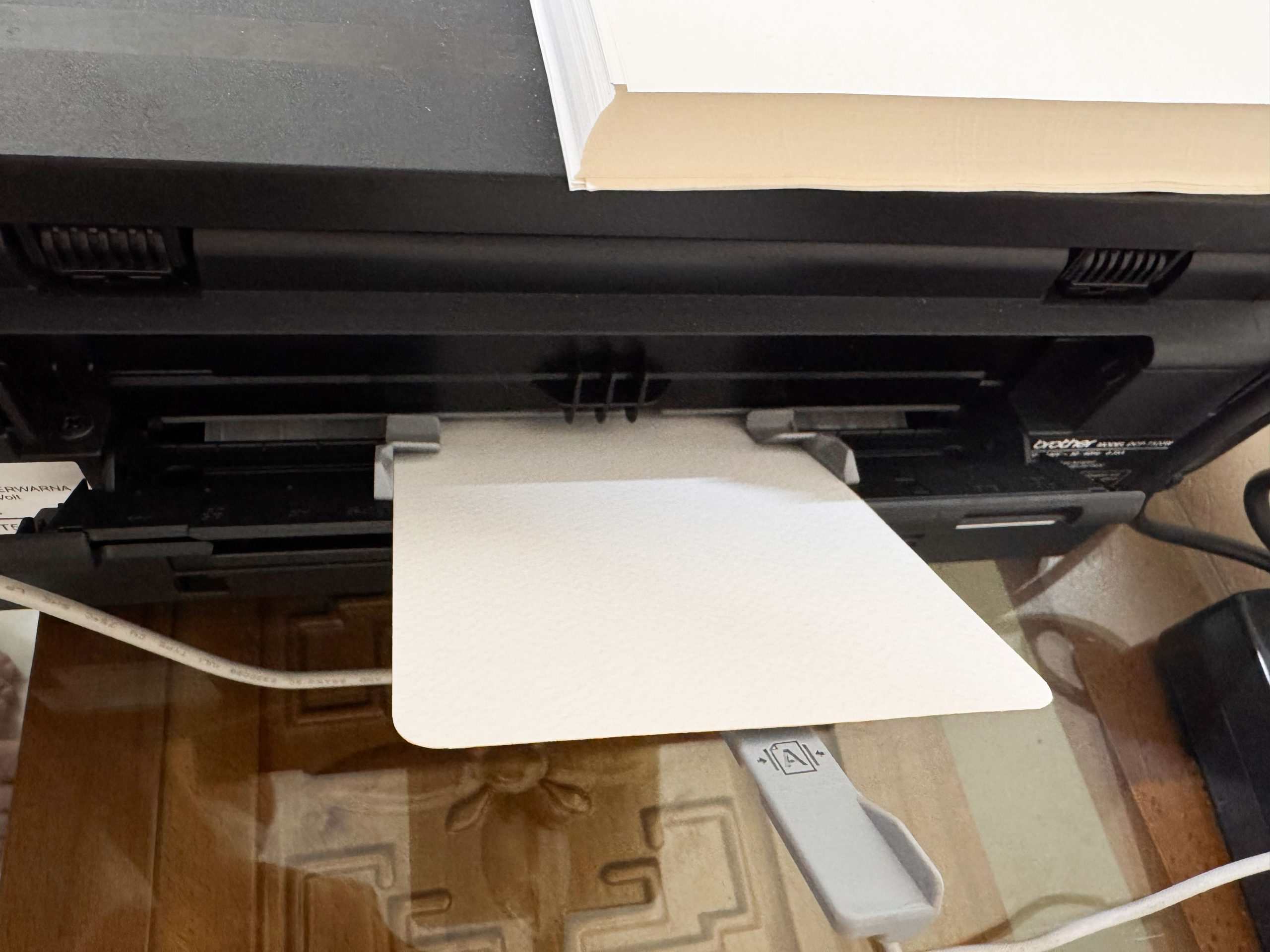
1. Check your printer’s maximum paper weight. Look for “paper weight” or “gsm” in the manual, especially in the manual feed slot section. For example, my printer – a Brother DCP-T520W – only takes lighter paper in the main tray, but its manual feed slot accepts up to 300gsm.
2. Cut your paper to US Letter (8.5×11 in) or A4 and keep it flat. Curled edges are the number one cause of paper jams. If your sheet is curled, press it under a few heavy books overnight.
3. Feed one sheet at a time through the manual feed slot. The paper path is straighter there, so the sheet bends less. Push gently until the printer pulls it in, and choose “thick paper,” “inkjet paper,” or “cardstock” in your print settings.
4. Print light gray lines in grayscale mode. On many inkjet printers, the black ink is pigment and the color inks are dye – mine works the same way. Printing in grayscale keeps your lines from bleeding, and light gray lines disappear under the paint.
5. Let it dry, then do a water test. Wait at least a few hours. Brush a stroke of clean water over a corner with a printed line: if the line stays put, start painting; if it smears, switch to the tracing method below.
What to Do If Your Print Smudges or Jams
• Lines smear while you paint: don’t scrub. Let the painting dry completely, then paint the next layer gently with a single stroke. A soft gray smudge usually blends into the shadows and is hard to spot once you’re done.
• Lines are too dark: press a kneaded eraser (a soft, moldable eraser) onto the lines before you paint to lighten them. Next time, make the lines lighter in the file.
• Paper jams: turn off the printer and pull the sheet out in the direction it travels – never yank it backward. If it jams twice, your printer isn’t a match for this paper, so don’t force it.
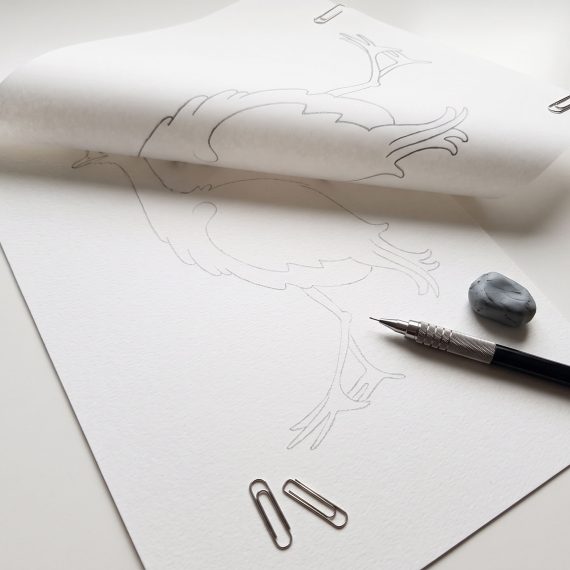
• Printer won’t take thick paper? Print the sketch on regular paper and trace it onto watercolor paper against a sunny window. I walk you through it in How to Transfer a Sketch to Watercolor Paper
Don’t get discouraged if your first print smudges. That sheet is still great painting practice – and now you know exactly what your printer can do.
A Few Papers I Recommend
• BAOHONG Academy 300gsm Cold Press (100% Cotton) – the paper I use for every postcard. It’s thick enough to stay flat while I paint and runs smoothly through my printer’s manual feed slot.
Popular watercolor papers in the US and Canada (all available in 140 lb / 300gsm – cut them to Letter size before printing):
Canson XL Watercolor – a budget favorite with beginners; great for test prints without wasting cotton paper.
Strathmore 400 Series Watercolor – a mid-range pick with an even cold press surface that’s easy to layer on.
Arches Cold Press – 100% cotton and premium; save it for the postcards you want to give away or keep.
Just starting out? See The Only 6 Supplies You Need to Start Watercolor.
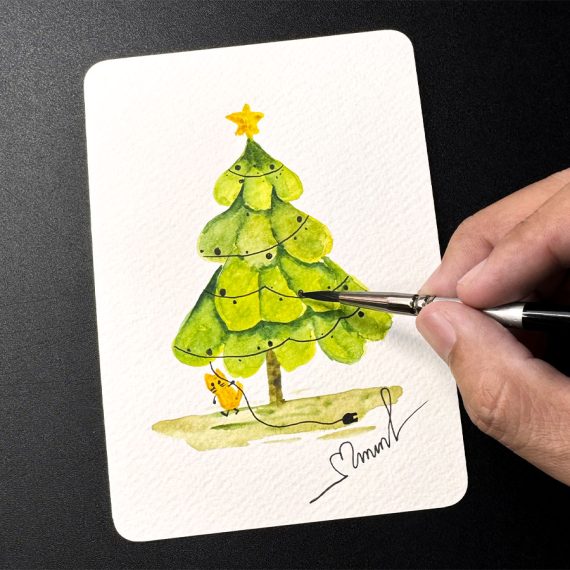
Try printing the Easy Watercolor Christmas Tree: A Cute 5-Minute Postcard sketch – the simple lines make it a perfect printer test, and it’s just in time for holiday cards. Want more practice? Check out the Easy Watercolor Practice Playlist.
Almost every day, I share an easy watercolor painting – plus sketches you can print and paint right away. Come say hi and show me the first postcard you print!
Follow on FacebookFAQs
No. Many home printers only take thin paper in the main tray, so 300gsm watercolor paper jams easily. Check the maximum paper weight (gsm) in your manual – many inkjet printers accept thicker paper through the manual feed slot.
It can, if the lines are printed with dye ink, which dissolves in water. Pigment ink is much more water-resistant. Print light gray lines in grayscale, let them dry completely, and test with a stroke of water before you paint.
It’s not a good idea. Laser printers use heat and powdered toner, which can jam on thick, textured paper and may damage the printer. Only try it if the manufacturer clearly says your model handles heavy cardstock.
It depends on the printer. 300gsm (140 lb) is the most popular weight for beginners, and some home inkjet printers accept it through the manual feed slot. If your printer tops out around 200gsm, print on regular paper and trace instead. Read more: Hot Press vs Cold Press Watercolor Paper (and Rough)
Not at all. Many professional painters transfer their sketches with a printer so they can save their energy for the painting itself. For beginners, a printed sketch lets you focus on water, color, and brushwork – the skills that matter most in watercolor.


No Comments