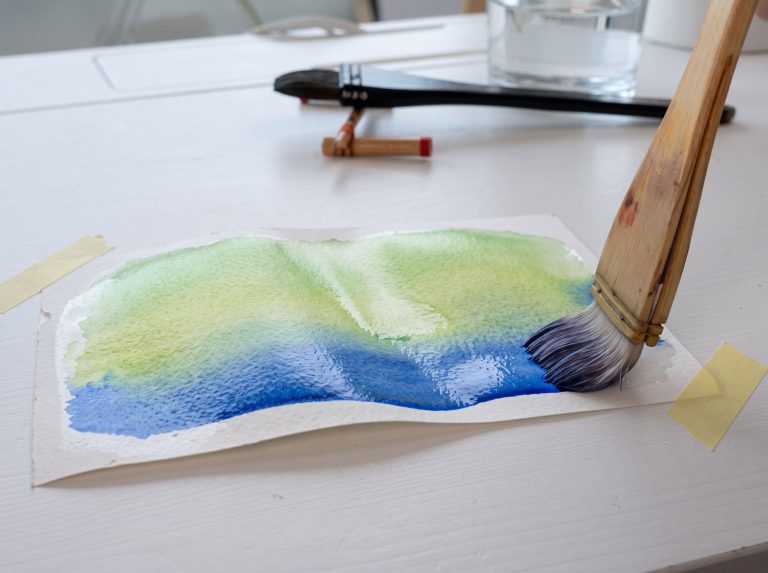
You’ve just finished a beautiful background wash, and when you look back, the paper has rippled up like waves, with paint pooling in the low spots. Watercolor paper buckling happens to everyone who paints with watercolor – it’s completely normal, I promise.
In this post, I’ll explain why paper warps, share four ways to prevent it before you paint, and show you how to flatten a painting that’s already finished.
Best for: beginners whose paper warps while painting · Reading time: 5 min
This post contains affiliate links. As an Amazon Associate I earn from qualifying purchases.
Quick answer
To stop watercolor paper buckling, use 300gsm (140 lb) paper, tape down all four edges before you paint, and avoid flooding the paper with puddles. If a painting has already buckled, mist the back lightly and press it under a stack of books overnight.
Why does watercolor paper buckle?
Paper is made of cotton or wood fibers. When they get wet, they soak up water and swell. The wet areas expand while the dry areas don’t, so the sheet gets pulled out of shape and rises into waves. As it dries, the fibers shrink back unevenly, so the paper rarely goes completely flat on its own. Three things make watercolor paper buckling worse:
Thin paper
Lots of water
Paper that isn't secured while you paint
4 ways to prevent buckling before you paint
1. Choose heavier paper
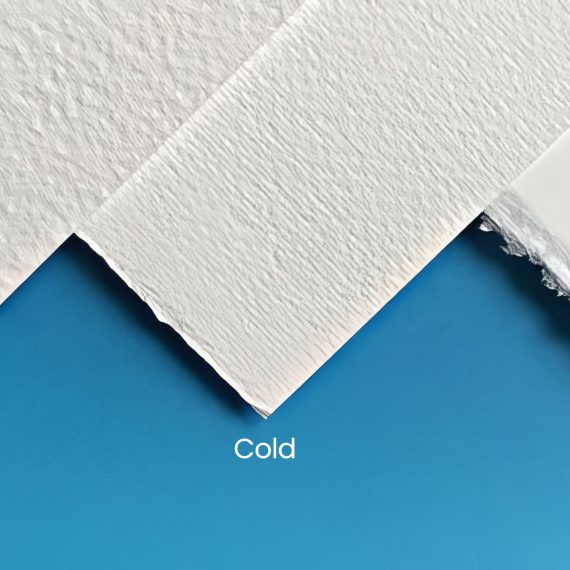
300gsm (140 lb) is the minimum for watercolor. Thinner paper like 190gsm (90 lb) buckles almost instantly. 640gsm (300 lb) barely buckles at all, but it costs much more, so for postcards 300gsm is plenty. Learn more about paper weight and texture in Hot Press vs Cold Press Watercolor Paper (and Rough)
2. Tape down all four edges
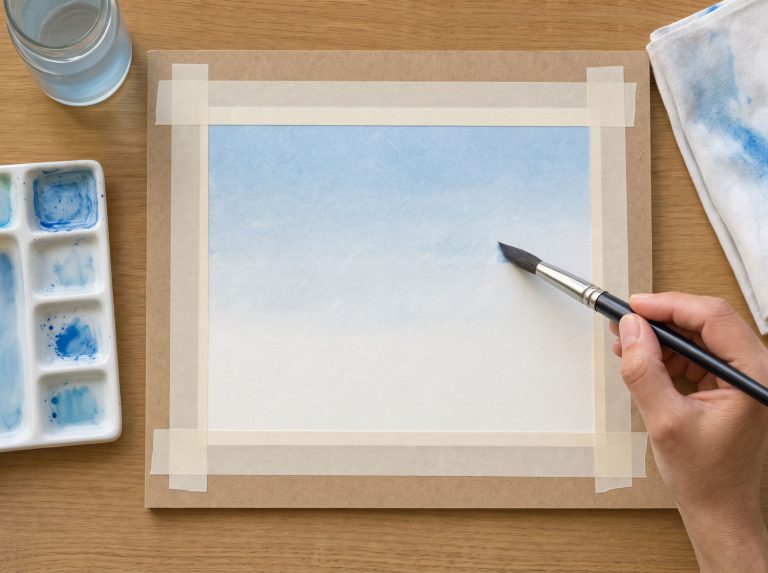
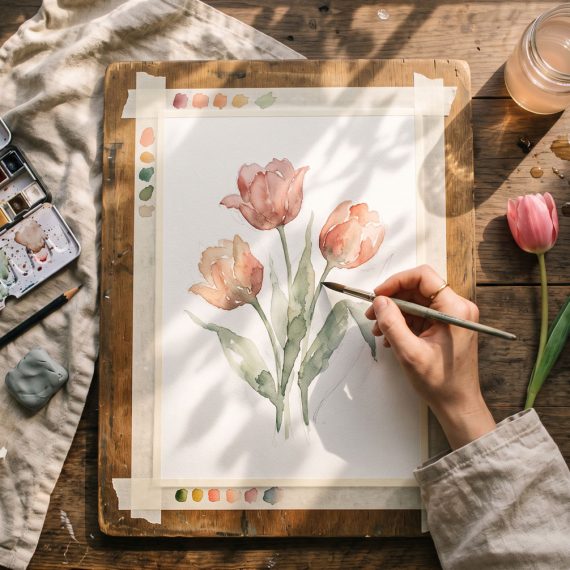
Tape your paper to the table or a piece of stiff board with low-tack tape (painter’s tape or washi tape), covering about 1/4 inch of each edge. The tape stops the edges from pulling inward, and it leaves a crisp white border when you peel it off.
3. Control your water
Blot extra water from your brush on a paper towel before you paint. If you see a puddle forming, touch it with a thirsty, damp brush to soak it up. Work in small areas instead of soaking the whole sheet at once.
4. Use a watercolor block or stretch your paper
A watercolor block is glued on all four sides, so you can paint right on it without tape and remove the sheet once it’s dry. For large, very wet paintings, artists also stretch their paper: they soak the sheet, tape it to a board with gummed tape, and let it dry tight. For small postcards on 300gsm paper, you usually don’t need to stretch.
Want to watch how I prep my paper and paint a full postcard from start to finish? Subscribers get 2 new full video tutorials every week, Tuesday and Thursday mornings (US time), with unlimited replays and content made just for them, for less than a cup of coffee a month.
Already buckled? How to flatten a finished painting
Let the painting dry completely, ideally for a few hours.
Lightly mist the back of the painting (not the painted side) with water.
Sandwich it between two sheets of clean paper or paper towels.
Lay it on a flat surface and stack a few heavy books on top. I usually use this 😁
Leave it overnight, and by morning it should be flat again.
In a hurry? You can iron the back of the painting on a low, dry setting with a clean sheet of paper in between. Skip this if your painting has white acrylic dots or metallic details, since heat can make them stick to the paper on top.
Common mistakes when removing tape
Peeling while the painting is still damp: the paper can tear and the edges can bleed. Wait until it's completely dry.
Pulling straight up: peel slowly at a low angle, away from the painting.
Using tape that's too sticky: office tape or strong masking tape can rip the paper surface. If the tape sticks, warm it with a hair dryer for a few seconds to soften the glue.
Low-tack tape like painter’s tape or washi tape. Always remove it once the painting is completely dry, peeling slowly at a low angle away from the art.
Yes. Iron the back on a low, dry setting with a clean sheet of paper in between. If your painting has acrylic or metallic details, use the book-pressing method instead.




No Comments