Follow a 10-day watercolor fruit painting challenge, day by day, with tips, techniques, and full video tutorials for each piece.
Ten days ago, I set myself a simple challenge: paint one fruit a day in watercolor and post the result, no matter how the piece turned out. This kind of watercolor practice is one of the fastest ways to improve — it forces you to make decisions quickly, repeat techniques often enough that they start to stick, and see your own progress in real time. Below is a day-by-day look at the whole 10-day watercolor fruit painting series, along with what I learned from each piece.
A structured watercolor challenge like this works because it removes the pressure of finding the ‘perfect’ subject every time. Fruit is an ideal choice for this kind of daily watercolor painting practice: the shapes are simple enough to finish in one sitting, but the range of colors, textures, and surface qualities — from the glossy skin of a persimmon to the matte ridges of a pumpkin — is wide enough to keep every day interesting.
I started the challenge with a single persimmon, focusing on building confident washes of red and orange and blending them wet-on-wet without losing the fruit’s rounded form.
With this crisp persimmon, it was my first day practicing watercolor painting, but since I didn’t understand much about the technique yet, the color came out looking flat and bled quite a bit in several areas.
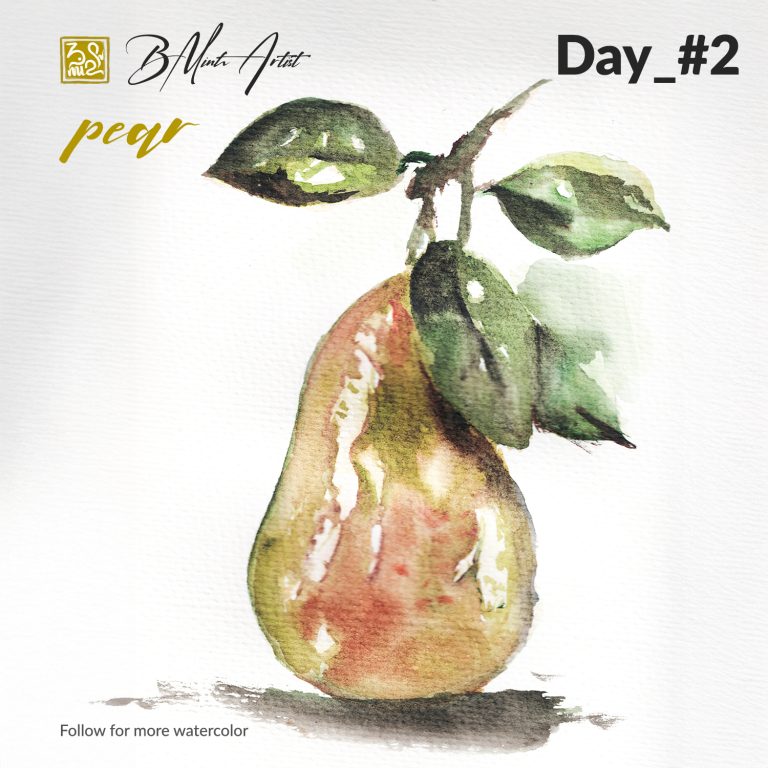
Day two moved to a pear with its stem and leaves attached, which meant practicing subtler color transitions between yellow-green and blush red, plus my first attempt at leaf shading.
As for this pear, I chose a watercolor paper that wasn’t very good, so the colors of the pear didn’t turn out as nicely as I’d hoped. I learned from this and switched to a different paper afterward.
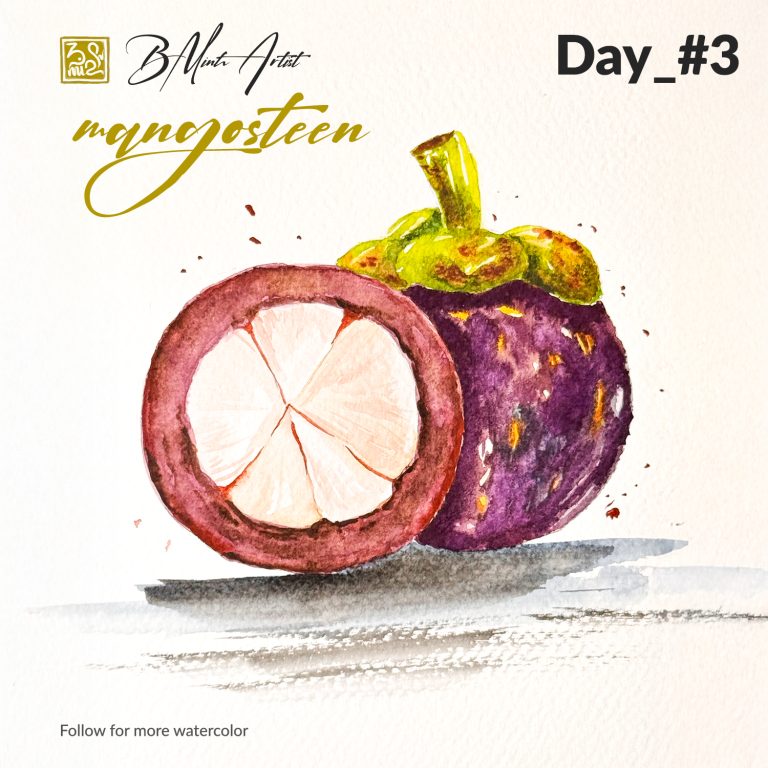
The mangosteen pushed me into deep purples and the tricky white flesh inside a cut half — a great lesson in controlling contrast between saturated color and clean, untouched paper.
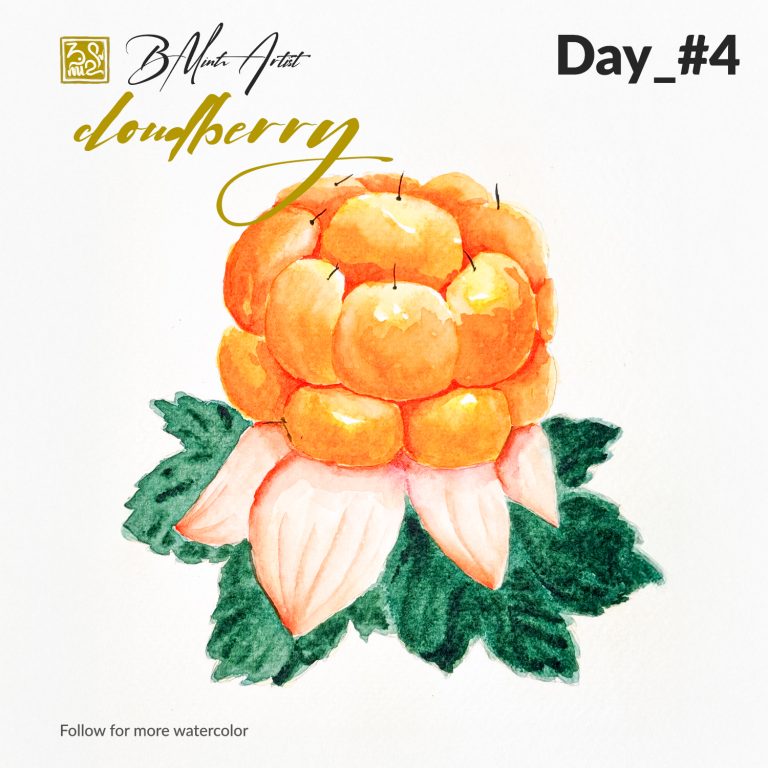
Cloudberries are made of dozens of tiny round drupelets, so this painting was really an exercise in repetition — keeping each little sphere consistent in light direction while still looking painterly.
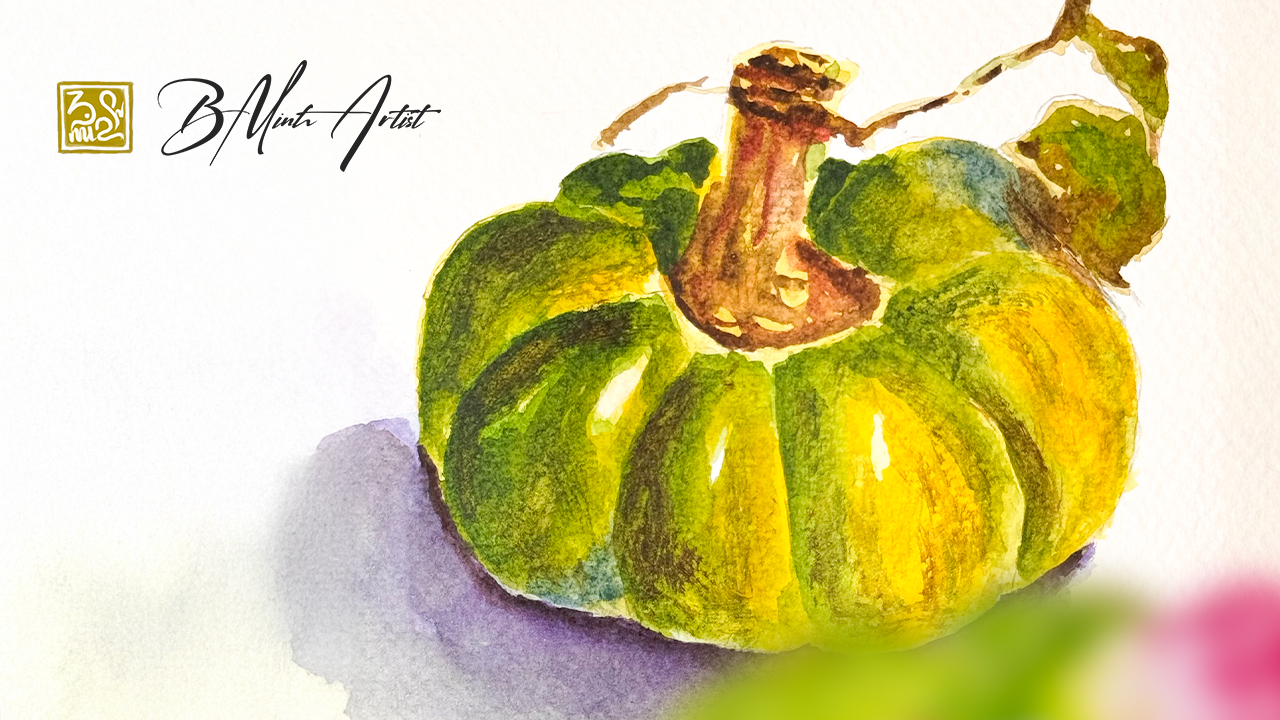
The ribbed pumpkin was about rhythm: repeating the same curved brushstroke along each lobe to describe its ridged surface, plus a woody stem that needed a completely different, drier texture.
A cluster of wax apples let me practice painting several fruits at once, layering pink and green tones while keeping each individual fruit readable within the group.
Returning to persimmons, this time as a pair still on the branch, gave me a chance to compare progress against Day 1 — the washes were noticeably more controlled and the highlights cleaner.
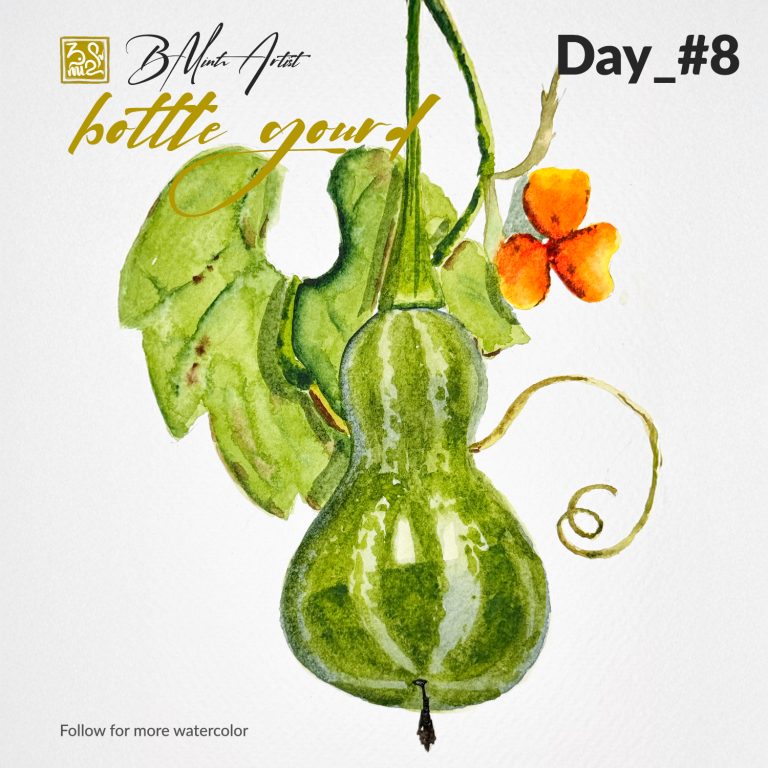
The hanging bottle gourd was the most ambitious composition so far, combining a glossy curved fruit, a curling tendril, and a small flower — you can see the full step-by-step for this one in a separate tutorial.
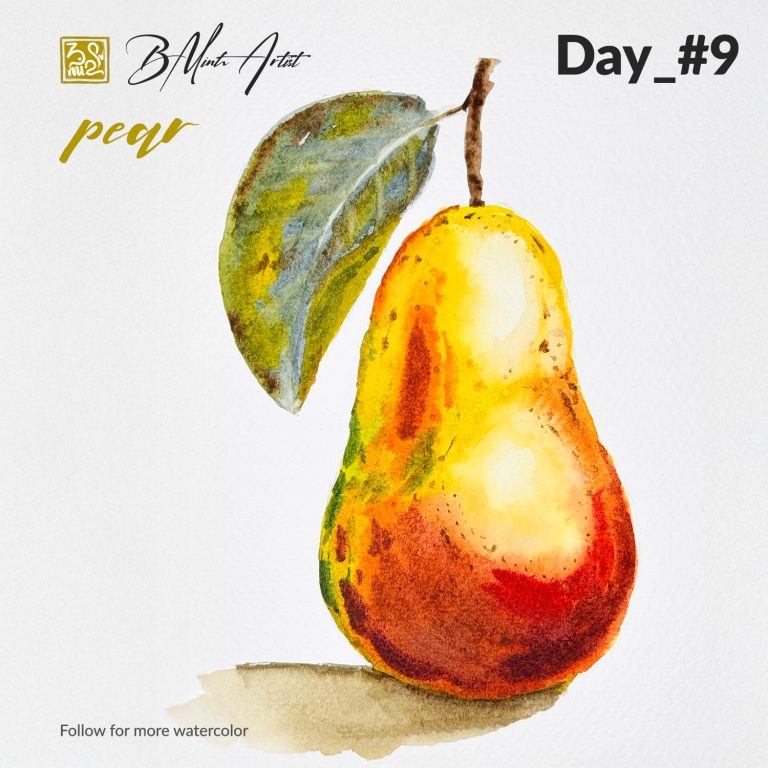
A second pear painting, this time warmer and more saturated, showed how much smoother my wet-on-wet blending had become compared to Day 2, especially in the transition from yellow to red.
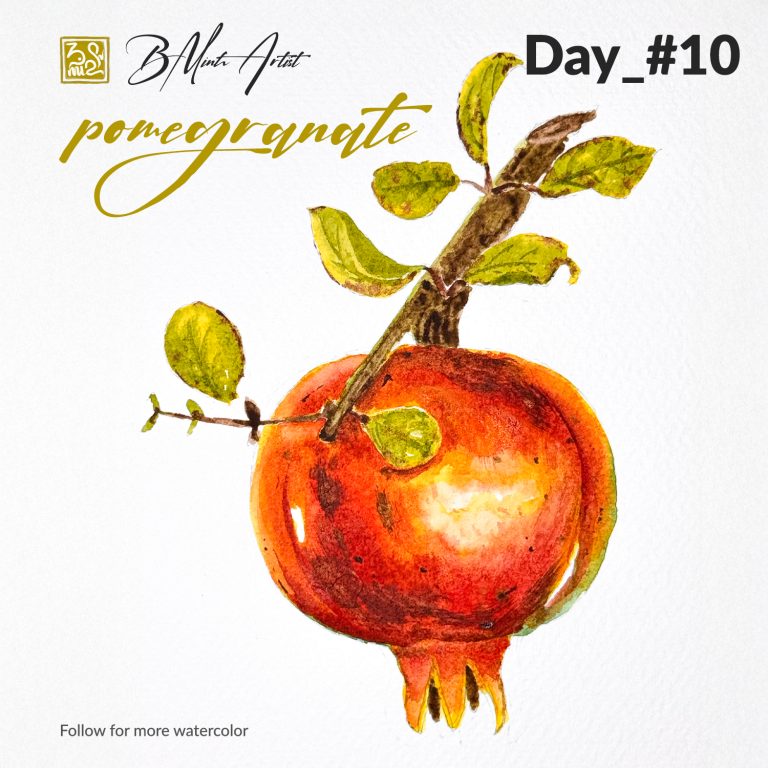
I closed out the challenge with a pomegranate on its branch, layering deep reds against a woody stem and small leaves — a fitting finish after ten days of steadily building color confidence.
This 10-day watercolor fruit painting challenge turned out to be one of the most useful stretches of practice I’ve done — not because every painting was strong, but because the daily rhythm built real, visible skill. If you want to see the brush-by-brush process behind any of these pieces, including the bottle gourd from Day 8, the full tutorials are on the YouTube channel – BMinh.
No Comments